

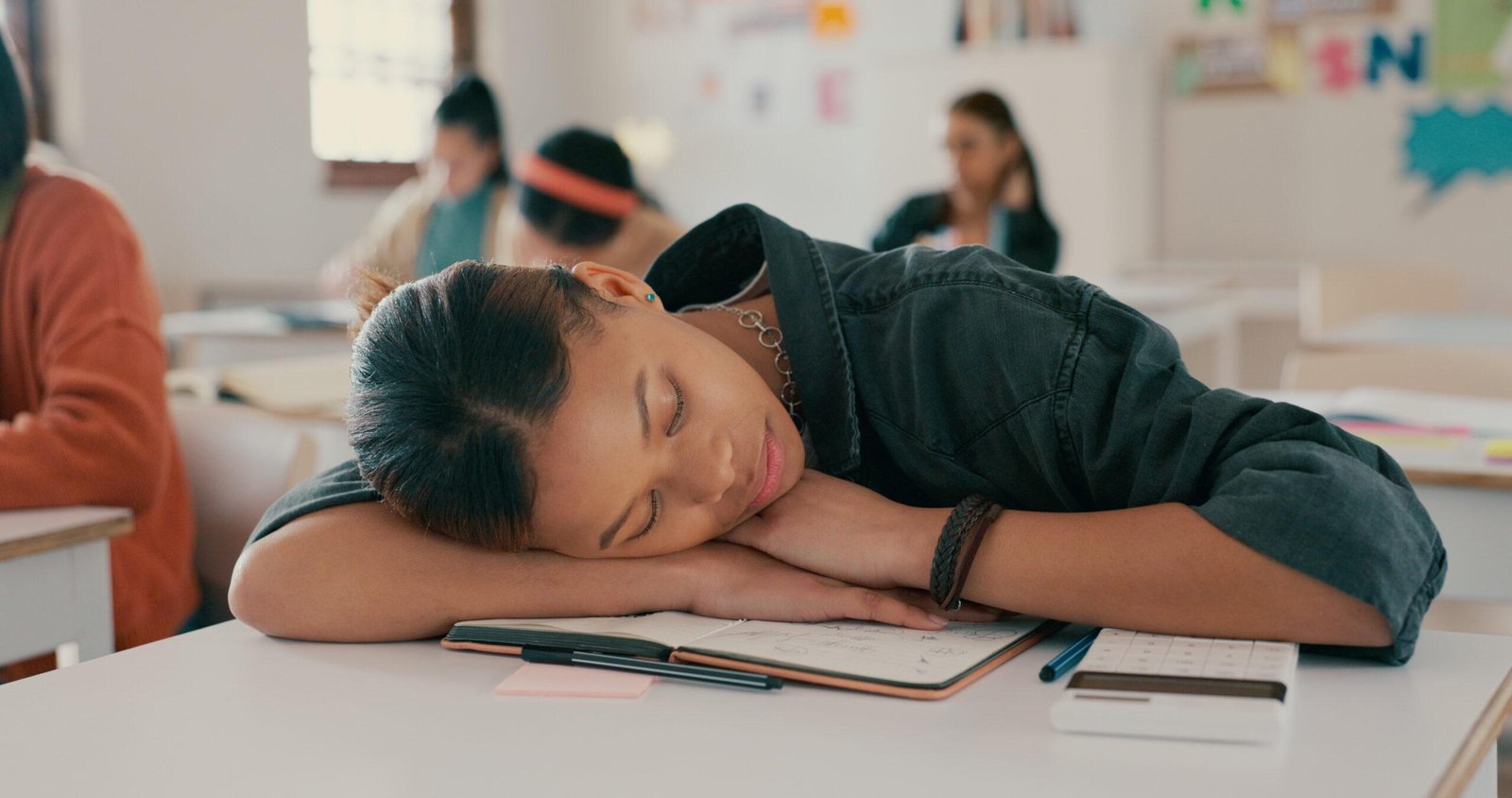
Teenage sleep problems are now regarded as one of the biggest challenges in secondary schools. Teachers regularly report tired, disengaged students, resulting in reduced academic achievement and poor behaviour. Parents similarly struggle with teens who can’t fall asleep or wake up for school. Understanding the causes of teenage sleep problems and the role schools can play is key to improving outcomes.
Why are teenage sleep problems so common?
This is due to a combination of biological changes in puberty, lifestyle changes with online gaming and social media, and increased academic pressures. Addressing teenage sleep problems early can prevent long-term issues, which, alongside decreased academic performance, can include mental health problems such as depression, anxiety and even increased rates of addiction.
Biological Changes to Sleep in Puberty
During puberty, teenagers experience a natural delay in their circadian rhythm. Melatonin (the sleep hormone) is released later at night, meaning teens are biologically wired to fall asleep later and wake later. This shift is around two hours in length, with teenagers becoming ‘super night owls’. As a result, teenagers tend to feel most alert and energetic later in the day, and many don’t feel sleepy until around 10 pm.
Lifestyle changes for teenagers that impact their sleep
Addressing teenage sleep problems requires an understanding of the lifestyle factors which contribute to them. In fact, the increase in adolescent sleep problems can be traced back to the use of portable TVs in bedrooms during the latter part of the 20th Century. This in-bed entertainment undermined the bedroom’s position as a haven for sleep.
More recently, 24/7 access to mobile phones and being allowed to use their mobile in the bedroom late at night has proven to be catastrophic for teenagers’ sleep. Research has shown that teenagers who use mobile phones in their bedrooms overnight get vastly reduced sleep. Parents and teachers must work together to tackle teenage sleep problems
Increased Academic Pressure and Its Impact on Sleep
Understanding how increased academic pressure can exacerbate teenage sleep problems is essential. As teenagers get older and enter their formal exam period, they are naturally under more pressure to study for longer periods than they are used to. Their change in sleep patterns during puberty is also accompanied by an increase in alertness and mental capacity later in the day than in younger children. The combination of these factors can lead teenagers to study later in the evening and often right up to their bedtime, meaning that they then struggle to fall asleep easily
How much sleep do teenagers need?
It’s recommended that younger school-aged children (aged 6-13) get between 9 and 11 hours of sleep per night, and teenagers (aged 14-17) get between 8 and 10 hours of sleep per night. For teenagers, the recommendation is that they get around 9.25 hours of sleep a night. However, some will need more than this. The sign of a perfect night’s sleep is if they can wake up feeling refreshed without using an alarm
How much sleep are teenagers actually getting?
The alarming statistics regarding teenage sleep problems and the amount of sleep they are getting highlight the need for immediate intervention.
The latest research by the Health Behaviour in School Study is showing a steady decline in the amount of sleep adolescents are getting. The study covers 11-, 13-, and 15-year-olds, with the 2022 report highlighting that, in the UK, only 42% of children reported getting at least 8.5 hours of sleep on school days. This was a sharp fall from 63% in 2018 and 71% in 2014.
In the USA, things seem even worse. Recent research has shown that just 23% of US teenagers are getting the right amount of sleep. Somewhat alarmingly, 50% of USA teenagers get less than 6 hours per night, suffering from severe sleep deprivation.
Signs of sleep deprivation in teenagers
Common signs include:
- Irritability or emotional outbursts
- Poor concentration and memory problems
- Low energy, with poor motivation or disengagement
- Frequent lateness or absenteeism
- Depression and anxiety
These behaviours are often misinterpreted as attitude problems rather than symptoms of sleep loss.
School start times and sleep deprivation
School start times can significantly impact teenage sleep problems and overall health. Research indicates that later school times can significantly reduce sleep deprivation among teenagers and, as a result, improve their academic performance and mental well-being. In the USA in particular, there is now a growing pressure for high schools to start later than their current 7.30 to 8.30 am start time.
There’s a summary of the benefits of why high schools should start later in my blog post of the same name.
How schools can support better sleep for teens
Many schools are implementing policies to address teenage sleep problems effectively. These include promoting awareness of sleep health and adjusting academic schedules. Providing information on the importance of sleep, encouraging healthy habits, and fostering an environment that prioritises well-being can create a supportive framework for students.
How sleep workshops help teenage sleep problems
Workshops can be a valuable tool in educating both parents and teachers alike about the importance of sleep and combating teenage sleep problems. My interactive, one-hour Sleep Workshop for Schools covers the top-line science of sleep, incorporating the latest research and practical strategies and tips to improve sleep hygiene.
The workshop empowers families and students to make informed decisions about sleep and technology use, and how to create healthier routines. Schools have found that they have provided the bedrock for students to improve their sleep, informing and inspiring them to adopt healthy sleep habits. I also offer a free 1/2 hour consultation for students who would like to discuss a sleep problem they have in more detail. This support is also free for all teachers as my way of giving back
How to book a sleep workshop for schools
If you would like to find out more about my Sleep Workshops for Schools, please reach out using the contact form or contact me directly at dave@aquamarine-squirrel-107177.hostingersite.com